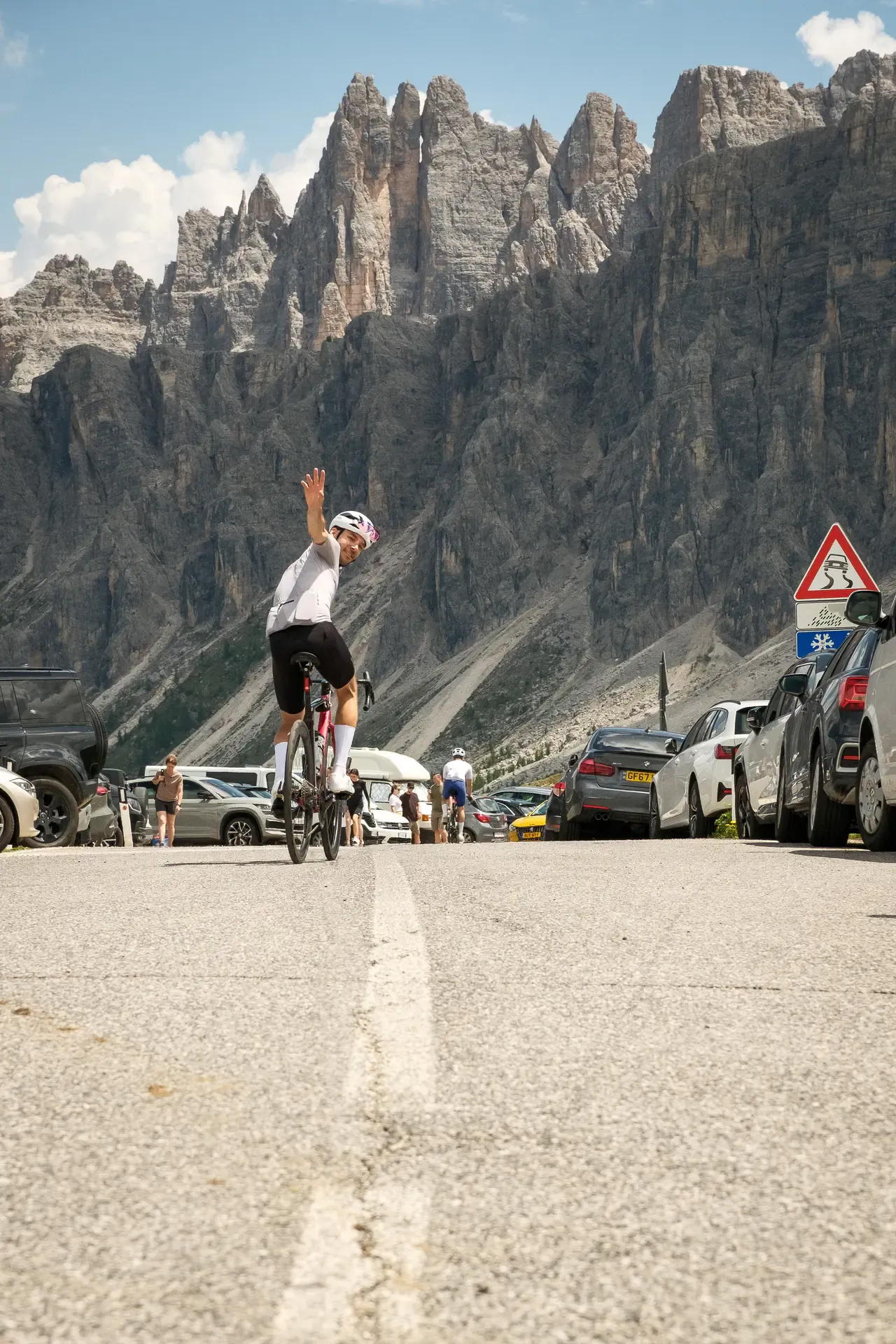
This summer, Ignac, a certified crazy man who rode the entire circumference of Slovenia a few years back, decided that an ordinary Everesting simply wasn’t enough of a challenge.
Although I have to admit, we might be a little biased here at gravgrav, considering our chief commander Max once set a triple Everesting world record.
Nevertheless, Ignac, or Slavc, as most people know him, decided to take things a step further by taking on the Everesting 10K ROAM challenge.
So, what exactly does that mean? The classic Everesting is simple, at least on paper: pick a single climb and ride it over and over again until you’ve accumulated 8,848 meters of elevation gain, the height of Mount Everest. ROAM changes the rules. Instead of repeating one hill, you can make an actual route out of it, but you have to climb even higher: 10,000 vertical meters in a single ride. No sleep, one continuous effort, and a route of your own making.
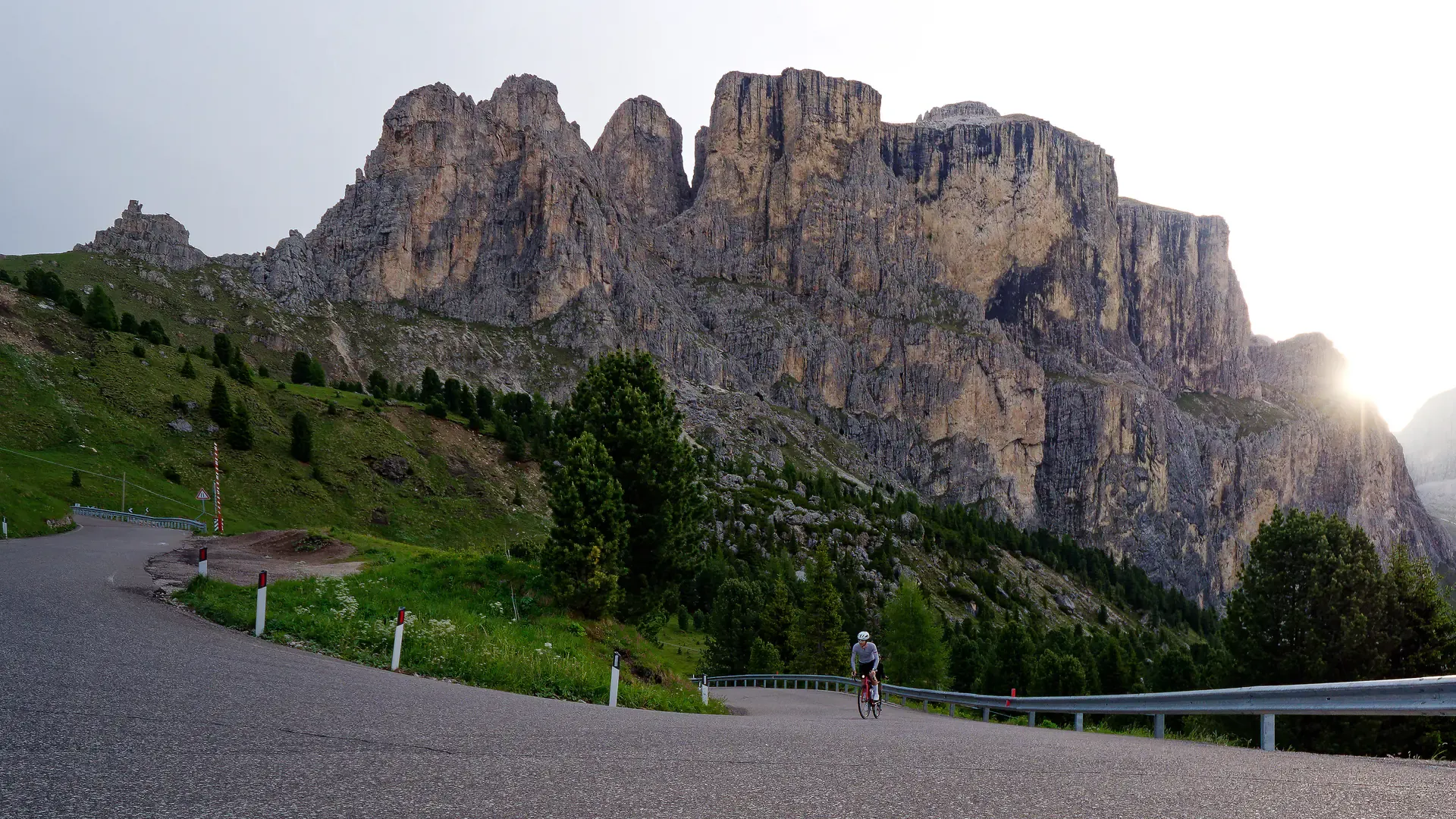
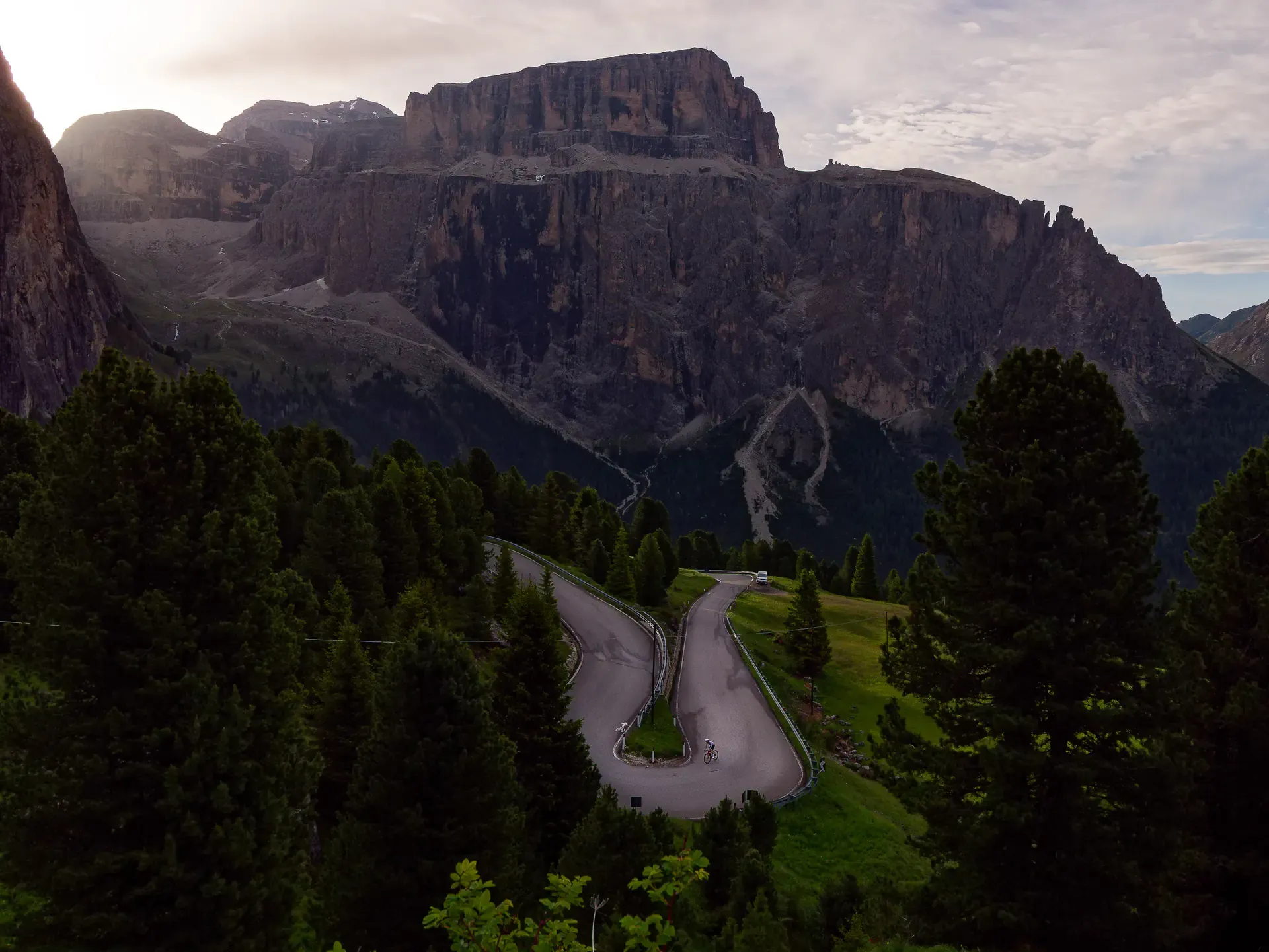
Ignac chose to do his in the Alps.
Since he already wrote an extensive report of the whole escapade on his website, there wasn’t much point in asking him to retell the story. Instead, I decided to nerd out properly.
We talked about equipment choices and all the tiny decisions behind them, what and how much he ate, how he trained for something this stupidly demanding, how he designed a route with 10,000 meters of climbing that was actually rideable, and what happens to your pacing strategy when a ride stretches deep into the unknown.
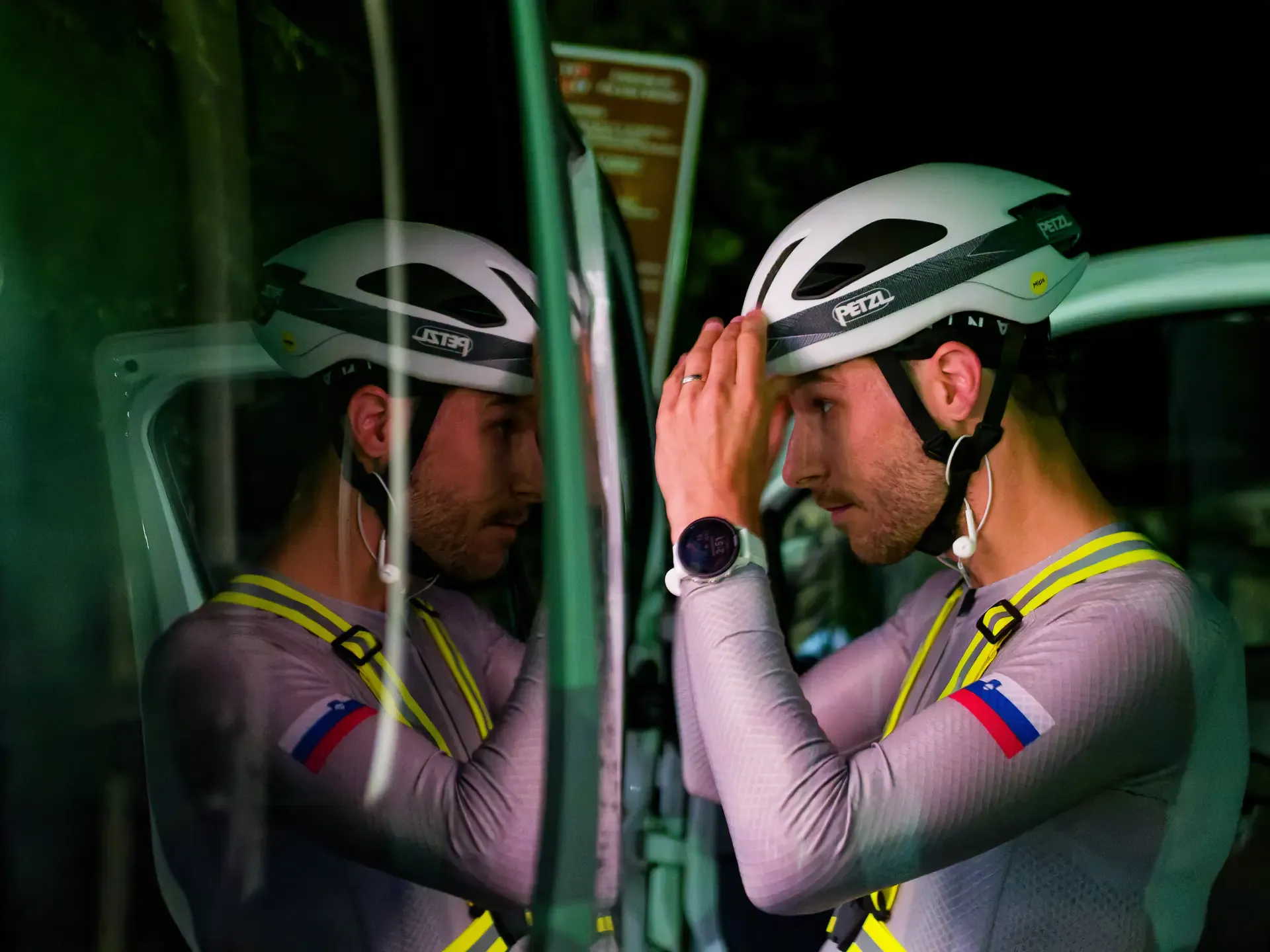
Let’s start with the route. How do you even design a ride with 10,000 meters of elevation gain? Were you optimizing for elevation per kilometer, road quality, resupply points, familiarity, scenery, or simply trying to make something you would actually enjoy riding?
The basic idea had actually been in my head for a few years. I made quite a few versions before the final route was confirmed. Some of the first ones included Stelvio, Gavia and a few other big climbs on the way towards the Sella Ronda, which was kind of the main thing I wanted to include from the beginning.
In the end, I think the final route was a good combination of all the things you have to think about with a project like this: elevation, distance, road quality, scenery and also some kind of story to the route. I didn’t want to collect 10,000 vertical meters just for the number. I wanted to actually cross the Alps and feel like I was going somewhere.
I also wanted to make the whole thing as fast as possible, partly so my family wouldn’t have to stress about my stupid ideas for too long. :)
So finishing in Kranjska Gora made a lot of sense. Bolzano to Kranjska Gora gradually became the obvious line.
Resupply wasn’t such a big factor because I had a support crew, which gave me quite a lot of freedom when designing the route.
What did the final numbers look like compared with what you planned? Distance, elevation, moving time, total time, average power, normalized power, calories, whatever numbers you were obsessing over beforehand.
The plan was roughly 400 km and 10,000 vertical meters. I had 20 hours somewhere in my head as a very optimistic target and 24 hours as a more realistic Plan B.
In the end, it was 400.30 km, 10,011 meters of elevation and 22 hours 44 minutes total time. So actually very close to the original plan. Maybe a little too close when it comes to elevation. :)
Overall data:
- Distance: 400.30 km
- Elevation: 10,011 m
- Total time: 22h 44min
- Moving time: 20h 10min
- Average power: 160 W
- Normalized power: 187 W
- Calories: 13,433
- Strain Score: 1169
Before the ride, I was definitely looking at power and all the other training numbers, but once you’re out there for that long, they slowly become less important. At some point, the main number you care about is how many vertical meters are still left.
How much route redundancy did you build in? With GPS elevation measurements being imperfect, did you deliberately aim above 10,000 m to ensure there was no chance of finishing at 9,950?
Not enough, apparently. :)
The planned route was above 10,000 according to the route planner, but I knew there could be differences between the planner, the bike computer and my watch. At the same time, I didn’t want to add hundreds of unnecessary vertical meters just to be safe. After 400 km, every extra climb counts.
There were actually a couple of moments when I started thinking I might not make the 10K at all. Before the last two passes, I checked the elevation and saw something around 7,500 meters. I remember thinking: “What? There are still 2,500 meters to go? No way.”
I had my Forerunner with a barometric altimeter as well, so I trusted the watch a bit more than the head unit, but it was still a bit of a mood destroyer because suddenly I wasn’t completely sure anymore.
Then, just before the final climb, I had a call with my wife, checked the elevation again and it showed something around 8,700 meters. I couldn’t believe there was still so much left for one climb. But there was.
And I was slow as a snail by then. Vršič took forever and I just wanted to finish the thing. When I finally reached the top, my watch showed around 9,985 meters. That was actually a really good moment because I knew then that I would make it. Another twenty meters or so somewhere in Kranjska Gora was definitely possible. :)
In hindsight, finishing with 10,011 meters was ridiculously close.
Walk me through the bike setup. What bike, wheels, tires, gearing, and luggage did you use, and which of those choices were specific to this challenge?
I rode my Canyon Ultimate CF SL 8 Di2 with No Limited Pro Race wheels and Continental GP5000 S TR 32 mm tires.
The cassette was an 11–34, which was definitely a deliberate choice for this ride. To be honest, I wouldn’t have minded having an even easier gear by the end.
I kept everything on the bike very minimal. Basically just the mandatory stuff: head unit, rear light and the essentials in my jersey pockets: food, gels, phone and a few things for quick repairs.
Because Jernej and Andrej were following me in the support van, most of the food, clothing, tools and spare equipment could stay with them. That allowed me to keep the bike as light and simple as possible.
There were a few exceptions. Early in the morning and later at night, I had the front light on the bike, and at one point I also fixed a power bank to the bike to recharge the head unit. Other than that, it was a pretty light setup.
What was your easiest gear, and did it still feel easy after 8,000 meters of climbing?
36x34.
And no. After 8,000 meters, there is no easy gear anymore. :)
On the first climbs, you can still think about cadence and efficiency. Later on, you’re mostly just happy if there is still another gear available when the road gets steep.
By the final climb to Vršič, I was riding with a very low cadence and as little power as possible, basically just trying to keep the bike moving.
Where did you deliberately sacrifice speed for comfort or reliability? Wider tires, easier gearing, more luggage, different clothing, etc.
The gearing was probably the most obvious choice. An 11–34 cassette might cost you a little bit compared with a tighter cassette, but after many hours of climbing, I would much rather have an easier gear than save a few grams somewhere else.
The 32 mm tires were another one. I wanted some extra comfort and reliability instead of chasing the absolute fastest setup.
On a 400 km ride over twelve Alpine passes, comfort eventually becomes performance anyway.
Was there anything you carried for 22+ hours and never used? And, more importantly, anything you wished you’d brought?
There were probably a few small repair things in my pockets that I never used, but that’s a good thing. I’d rather carry something for 22 hours and never need it than need it somewhere in the Alps and not have it.
But because I had the support van, I really didn’t have to carry much. Jernej and Andrej did a great job and basically had everything I could possibly need with them.
I also can’t really think of anything important I wished I’d brought. The support setup worked really well.
How do you train specifically for 10,000 meters of climbing? Is it mostly about building a huge aerobic base, or did you actually do sessions aimed at repeated long climbs and accumulated vertical meters?
The aerobic base is probably the biggest part of it. You can’t fake 20-plus hours on a bike.
But I also did some quite specific climbing sessions. One of the key workouts was seven repeats of roughly 25 minutes on the same climb, so around 3,000 vertical meters in one session. It wasn’t really about riding them hard. It was more about getting used to climbing again and again while keeping the effort under control.
I think that helped mentally as well. Instead of thinking about 10,000 meters, you start treating every climb as another small block.
I also searched for some longer climbs around home, but we don’t really have Alpine-style climbs here. I found a few that took around 50 minutes, but I would have loved to have something longer for training.
What did your biggest training weeks look like, and how close did you ever get to simulating the demands of the actual ride?
I never tried to simulate 10,000 meters. I don’t think there is much benefit in doing something almost as hard as the actual challenge in training. You would need a huge amount of recovery afterwards, and especially a huge amount of time. :)
I had a few longer rides before the attempt, but only a few longer than six hours or with more than around 3,500 vertical meters.
I still have to work and live a normal family life, so finding enough time for training is already a challenge on its own. I was generally aiming for around ten hours per week, but that changed a lot. Some weeks were maybe fourteen hours, some only seven.
I think I’ve also stepped back a bit from being too geeky about training compared with a few years ago. I still have a plan, but these days I mostly look a few days ahead and change things quite a lot depending on work, family and how I feel.
The main goal was to arrive at the start fresh and with a good endurance base, not to prove in training that I could already do the whole thing.
Did you have a power or heart-rate ceiling for the climbs? And how disciplined were you about sticking to it when the legs still felt good early on?
Yes. The basic idea was to keep everything under control and not spend too many matches early.
I didn’t focus too much on heart rate, but I had a pretty clear idea about power. Normalized power on the first climbs was somewhere around 210–220 watts, and on the later ones more like 190–200 watts. That was actually still a bit more than I originally planned, but in terms of fitness and power, I felt quite good.
My knees were a different story.
Especially early in a ride like this, it is very easy to ride 20 or 30 watts too hard because you’re fresh and everything still feels easy. I think I was reasonably disciplined, but there were probably still moments when I went a little harder than necessary.
Those watts always feel cheap at the beginning and very expensive ten hours later.
Can you see the fatigue accumulating in the data? For example, did power at a given heart rate start dropping, did cadence change, or did you simply become slower everywhere?
Yes, especially after around sixteen hours.
Until then, it still felt more or less like a very long bike ride. After that, it became more about managing accumulated fatigue.
You can also see the drop in heart rate and power on the last three climbs, which is pretty much what you’d expect after so many hours. Cadence also went down and everything gradually became slower.
In my case, the knee pain was mixed into this as well, so the lower cadence and slower climbing weren’t only normal fatigue. I was also trying to find a way of pedalling that kept the pain manageable.
How much did you eat? Give me the nerdy answer: grams of carbohydrates per hour, liters per hour, sodium, caffeine, real food versus gels.
The plan was around 80–90 grams of carbohydrates per hour and roughly 650 ml of fluid per hour, depending on temperature and where I was on the route.
Most of the carbs came from drink mix and gels, but because I had some planned checkpoint stops, I could also eat some normal food. I prepared pasta with a simple tomato sauce the day before and had that around lunchtime, which was a nice break from sweet stuff.
For caffeine, I used some caffeinated drink mix, gels and, later in the ride, some Red Bull.
I had a pretty structured nutrition plan before the start, but I wasn’t counting every gram while riding.
Did your nutrition strategy survive contact with reality? At what point, if any, did the carefully calculated carb intake turn into “whatever I can still force myself to eat”?
More or less, yes.
I’ve been paying quite a lot of attention to carbs during long rides for years now, so by this point it feels quite natural. I don’t really have to overthink it anymore.
Before the start, I prepared five separate bags with food and gels for the planned checkpoints. The first part went pretty much according to plan. Later on, I started going more by feel and by what my body was asking for.
I think I was around 80 grams per hour in the first half, and later it probably dropped closer to 50–60 grams.
Having the support crew helped enormously because I didn’t have to think about shops, carrying everything or making complicated decisions. Towards the end, the important thing was simply to keep some calories coming in with whatever still felt OK.
What was the hardest thing to keep under control: legs, stomach, temperature, hydration, sleepiness, or your head?
Probably my head, but a lot of that was connected with the problems I had with my knees.
Weeks before the ride, I’d made some changes to my position. After changing the setup on my gravel bike before Veneto Gravel and feeling a really positive difference, I wanted to get a similar feeling on the road bike. But at the same time, I had new shoes and a new saddle, and everything came together pretty close to the event. I never got the setup completely where I wanted it before the start.
Already after the first climb, I started feeling some pain in my right knee. It got worse, so I made a small adjustment. That helped the right knee a bit, but then the left one started hurting as well.
That’s probably one of the worst things that can happen on this kind of ride because you know you only have one real attempt. Normal leg fatigue is expected. Knee pain is different because you start wondering if it will actually stop you.
Somewhere around Passo Giau, I found a position that felt a little better, but after the descent the pain came back again. At some point, I basically decided that I would keep going as long as I could. If the knees said goodbye, then they said goodbye.
Luckily, they survived, but it was close. On Vršič, I was barely moving, riding a really low cadence and keeping the power as low as possible just to continue climbing.
Fitness-wise, I actually felt good, so I think the knees were probably one of the main reasons I didn’t finish a bit earlier.
At 8,848 meters, did passing the height of Everest actually mean anything psychologically, or were you already too cooked to care?
I honestly don’t even remember seeing 8,848.
That wasn’t the goal that day, so the number didn’t really mean much to me in the moment. I was already on the final climb and in probably my worst mood of the whole ride because I still wasn’t completely sure if the elevation would add up to 10,000.
So yes, I was probably too cooked to care. :)
And when your Garmin finally ticked over 10,000 meters on Vršič, how confident were you that the number would actually stick? You finished with 10,011 meters, so there wasn’t exactly a huge margin for error.
It actually didn’t tick over 10,000 on Vršič. :)
When I reached the top, my watch showed something around 9,985 meters. But at that point I was finally relaxed because I knew I would make it. I just needed a small loop in Kranjska Gora to collect the last few meters.
I probably should have added another hundred or two just for peace of mind, but at that point the idea of voluntarily finding another climb wasn’t very attractive.
In the end, it stopped at 10,011 meters. Not exactly a huge safety margin.
If you did exactly the same challenge again next weekend, what are the three things you’d change?
This one is actually quite easy.
I would drop the saddle a few millimeters, set the cleats properly and build a bit more elevation margin into the route.
I’ve made those small bike-fit changes since the ride and now I feel really good on the road bike, so I feel a bit stupid that I didn’t manage to sort it out before the attempt. But at some point, Saturday came and we simply had to go. :)
Other than that, I honestly wouldn’t change much. Jernej and Andrej were a great support crew and the basic concept of the route was exactly what I wanted.
And finally, after doing Everesting 10K ROAM, does a normal Everesting now seem reasonable?
Reasonable maybe, but I’m still not sure I want to do one.
The funny thing is that a normal Everesting might actually be mentally harder for me. With ROAM, you’re always going somewhere. The landscape changes, you cross passes, towns and valleys, and there is a real feeling of travelling through a place.
Repeating the same climb fifteen or twenty times is a completely different kind of challenge. So after doing Roam, I probably respect the classic version more, not less.
Roam just fits me better. For me, the route, the journey and everything that happens between the start and finish are a big part of why I want to do these things in the first place.