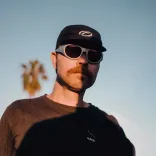
Through the lens of Nils Laengner: The road to accompanying riders across the mountain races, and an inaugural Taurus Mountain Race that didn't go to plan.
Some stories don't need a finish line to be worth telling. Photographer Nils Laengner has spent years following riders through the mountain races, capturing the moments that make these races extraordinary. This time, the mountains had a different story in mind.
How It All Began: It started with a film.
The first film about the Silk Road Mountain Race. Until then, I had spent most of my time photographing road cycling, mainly on the African continent. But at some point, the roads started to feel too familiar. Then I watched that film, and it got under my skin. I was hooked. I wanted to be out there, somewhere in those mountains, among people willing to push themselves into the unknown.
The race had just finished, so I started looking for a way in. That‘s when I heard that Nelson Trees was planning a new race in Morocco: the Atlas Mountain Race. I figured there would be hundreds of photographers trying to get a spot. I wasn‘t going to leave it to chance, so I wrote Nelson a ridiculously long email explaining why I wanted to be there. I sent him my portfolio, too. Apparently, something in those two things convinced him.
And that was that. Since the first Atlas Mountain Race, I‘ve been part of almost every race Nelson has organised. I‘ve missed a few along the way, but most of the time, I‘ve found my way back to the mountains.
What I didn‘t fully understand back then was what it meant to be there as a photographer.
The long nights with barely any sleep. The cold, the rain, the wind, the dust, the mud. Days spent chasing riders across landscapes that can be as unforgiving as they are beautiful. Getting stuck, getting soaked, getting it wrong, and then getting up and doing it all over again.
You learn to work when you‘re exhausted, to keep moving when everything hurts, and to make decisions with a head that hasn‘t had a proper night‘s sleep in days.
And then there is the hardest part: You see people suffer. You see them cold, broken, empty, sometimes barely able to take another step. There are moments when every instinct tells you to help, to take some of the weight off their shoulders, to make things a little easier. But you‘re there to document their journey, not to change it. You have to respect the race, the riders, and the choices they‘ve made.
Of course, safety always comes first. There are situations where being a human being matters more than being a photographer. But the tension between witnessing a moment and wanting to intervene is something you carry with you.
And still, I keep coming back. Because somewhere between the sleepless nights, the miserable weather, the broken equipment, and the endless kilometres, something happens that is hard to explain to anyone who hasn‘t been there.
You become part of the landscape, part of the rhythm of the race. You meet people at their most vulnerable and see them find a strength they didn‘t know they had. You witness kindness in the middle of nowhere, strangers looking after strangers, and moments of quiet determination that will never make it into a results sheet.
That‘s what keeps me coming back. Not just the racing, not just the mountains, and certainly not the comfort, because there is very little of that out there.
It‘s the people. The rawness. The uncertainty. The feeling that, for a few days, you‘re right where you‘re supposed to be, even when everything around you is falling apart.
Being there with a camera is exhausting, uncomfortable, and sometimes deeply frustrating. But it‘s also an enormous privilege. I get to witness stories that most people will never see, in places that leave a mark long after you‘ve come home.
It all began with a film and one very long email to Nelson Trees. I had no idea what I was signing up for. I‘m glad I did.
Taurus Mountain Race: for more than a year, I had been looking forward to this race.
Waiting for it. Working towards it. Turning it over in my mind, day after day, imagining the possible scenarios, the struggles, the triumphs, the moments when the mountains would demand everything a rider had left to give.
The first edition of the Taurus Mountain Race was supposed to be something extraordinary. Nelson Trees had described it as one of the most beautiful and spectacular races he had ever scouted. And I have little doubt that it would have lived up to every word. But the mountains had other plans.
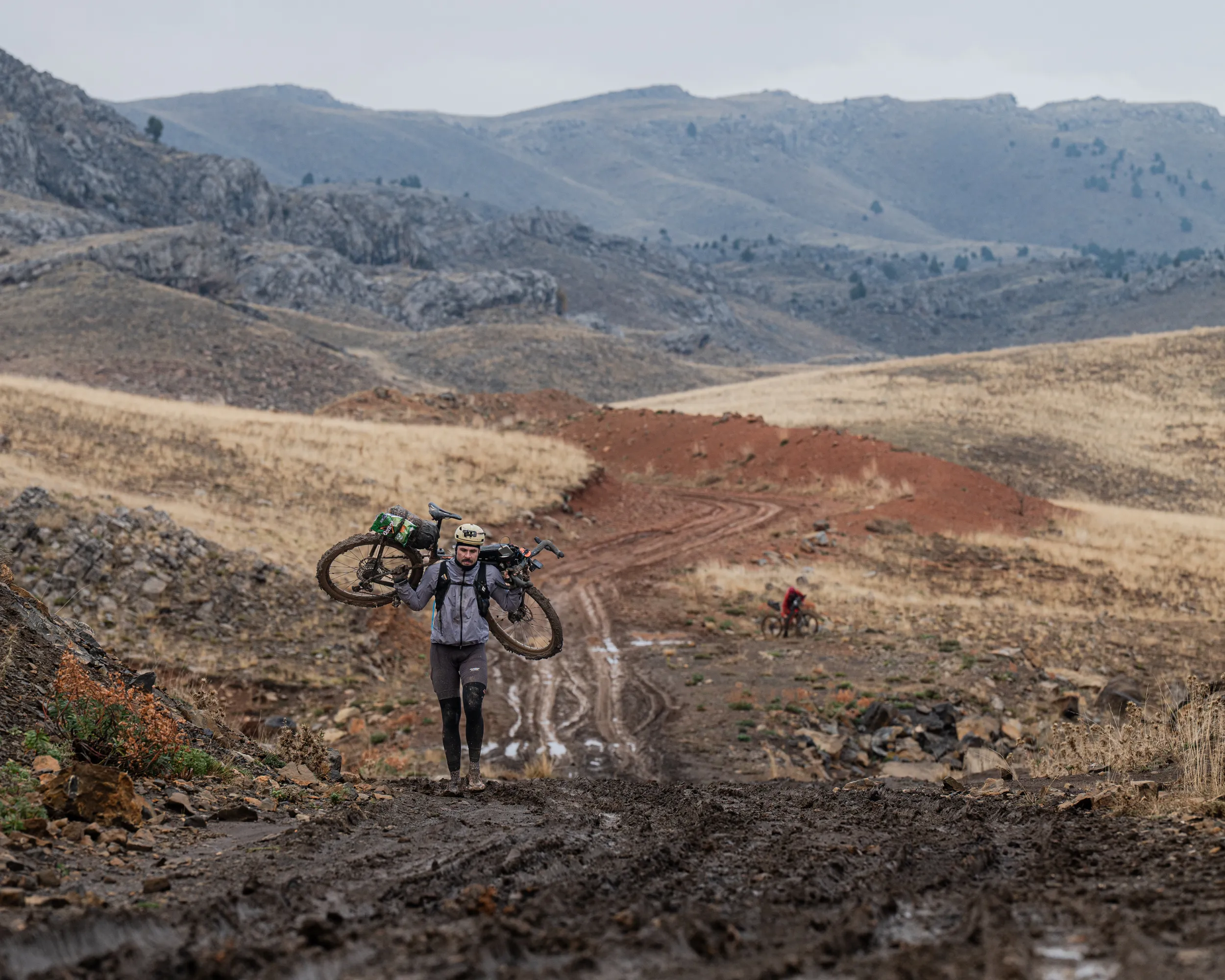
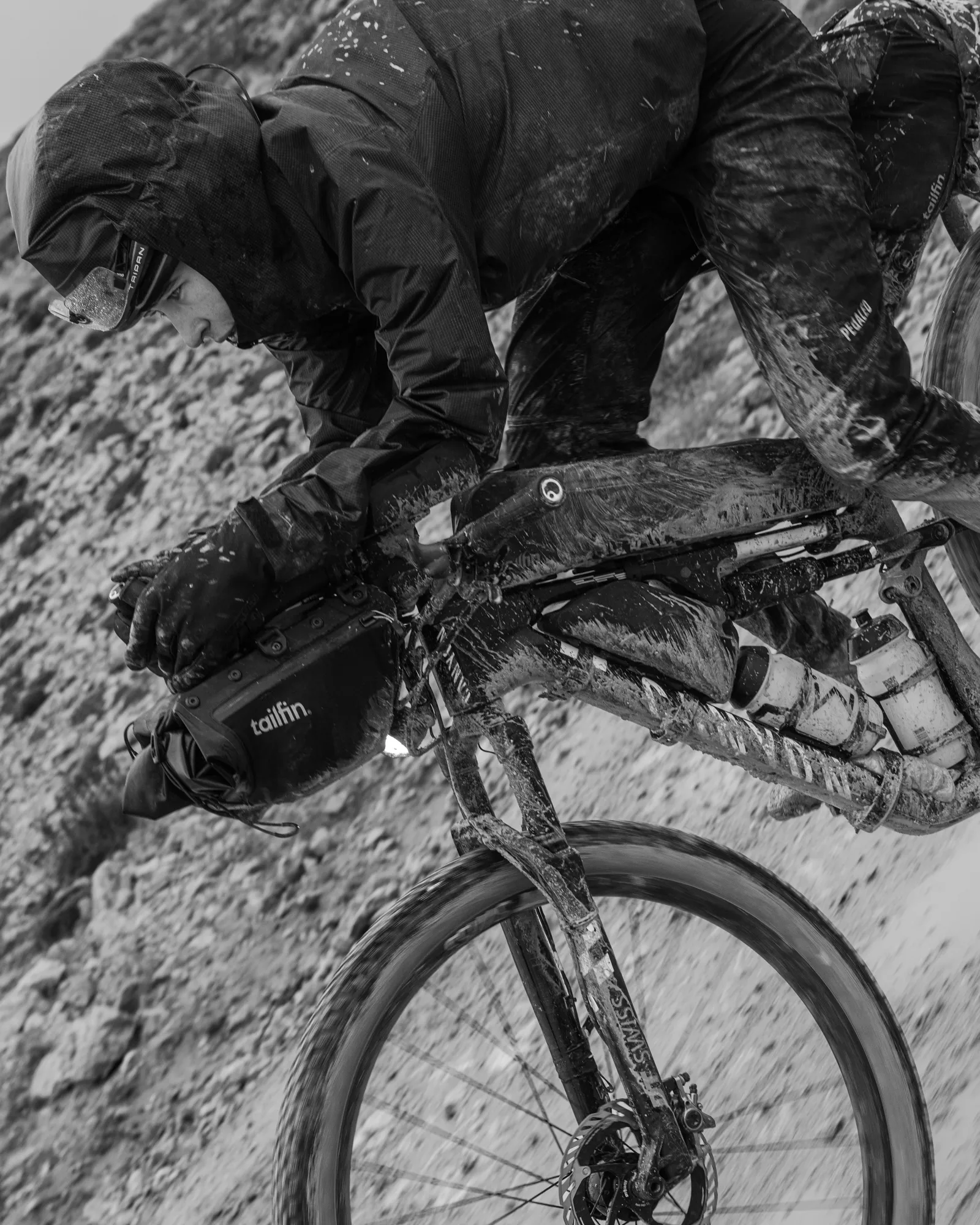
The rain came down, the wind howled, the fog swallowed the trails, and the mud took its toll. The weather turned a beautiful landscape into a hostile world, one where even moving forward became a battle. Bikes broke beneath the strain. Riders pushed where they should have been riding, fighting their way through conditions that grew more dangerous by the hour.
As a photographer, I witnessed moments of raw, undeniable beauty. Yet there was something bitter about it, too. I knew what lay hidden behind the curtain of fog and rain, mountains of extraordinary beauty that I could barely see. And I watched riders suffer through a landscape that had become almost impossible to comprehend, let alone conquer.
For me, this year had been a marathon long before the starting line of TMR. A year of anticipation, preparation, and quiet obsession. You learn to ration your strength over a long season, to keep something in reserve for the miles ahead, knowing that if you spend everything too soon, you may have nothing left when it matters most.
And then, suddenly, the race was over. Cancelled. Just like that.
You stand there with empty hands, with all that energy still burning inside you and nowhere left to put it. It is a strange kind of disappointment, not the exhaustion of having given everything, but the emptiness of being denied the chance to find out what you had left.
Still, some things are greater than a race.
We had prepared for the weather. The riders carried sleeping bags, bivvy bags, and the equipment needed to survive a night in the mountains. But preparation has its limits, and there comes a point when courage alone is no longer enough. The conditions had become so severe that continuing would have exposed people to a very real danger.
Calling the race off was not a failure. It was the right decision.
I saw a little of what those mountains were capable of myself. At one point, our vehicle became trapped high on the mountain, swallowed by mud and water. For an hour, we dug with our bare hands, clearing the ground around the wheels and hauling stones into place, trying to build a firmer path beneath the tyres. Winds exceeding 100 km/h hurled rain and hail into our faces. There was no glory in it, no finish line waiting at the end. Only the simple necessity of getting ourselves out.
Shortly afterwards, we came across two riders who were severely hypothermic, barely able to think clearly. We had to make a decision quickly. We chose to get them into a nearby shelter rather than attempt to drive them down the mountain. The road was treacherous, the fog was thickening, darkness was closing in, and landslides and ice made every kilometre a gamble. Trying to drive them down could have left us stranded again, forced us to leave someone behind, or put even more lives at risk.
And then there was the gas canister that caught fire while we were trying to make coffee. For a brief, terrible moment, it threatened to set the whole vehicle ablaze. We managed to stop it just in time.
There are moments when the right decision is not the one that takes you closer to your destination, but the one that brings everyone through the storm alive.
Small reminders, perhaps, that out there, in the mountains, the line between an adventure and an emergency can be frighteningly thin.
I came to the Taurus Mountains expecting a race. I left with photographs, stories, mud under my fingernails, and a profound respect for the forces that had brought the whole thing to a halt.
The disappointment is real. So is the unfinished feeling. I had imagined a thousand different ways this race might unfold, but not this one. Yet the mountains owe us nothing. Not a clear sky, not a beautiful view, not a finish line, and certainly not the adventure we had dreamed of. Sometimes, the wild takes the final word.
The first Taurus Mountain Race did not end the way we hoped. Perhaps that is what will make its first edition so difficult to forget. Not for the miles completed or the finishers celebrated, but for the raw reminder that out here, we are guests in a world far greater than ourselves.


