
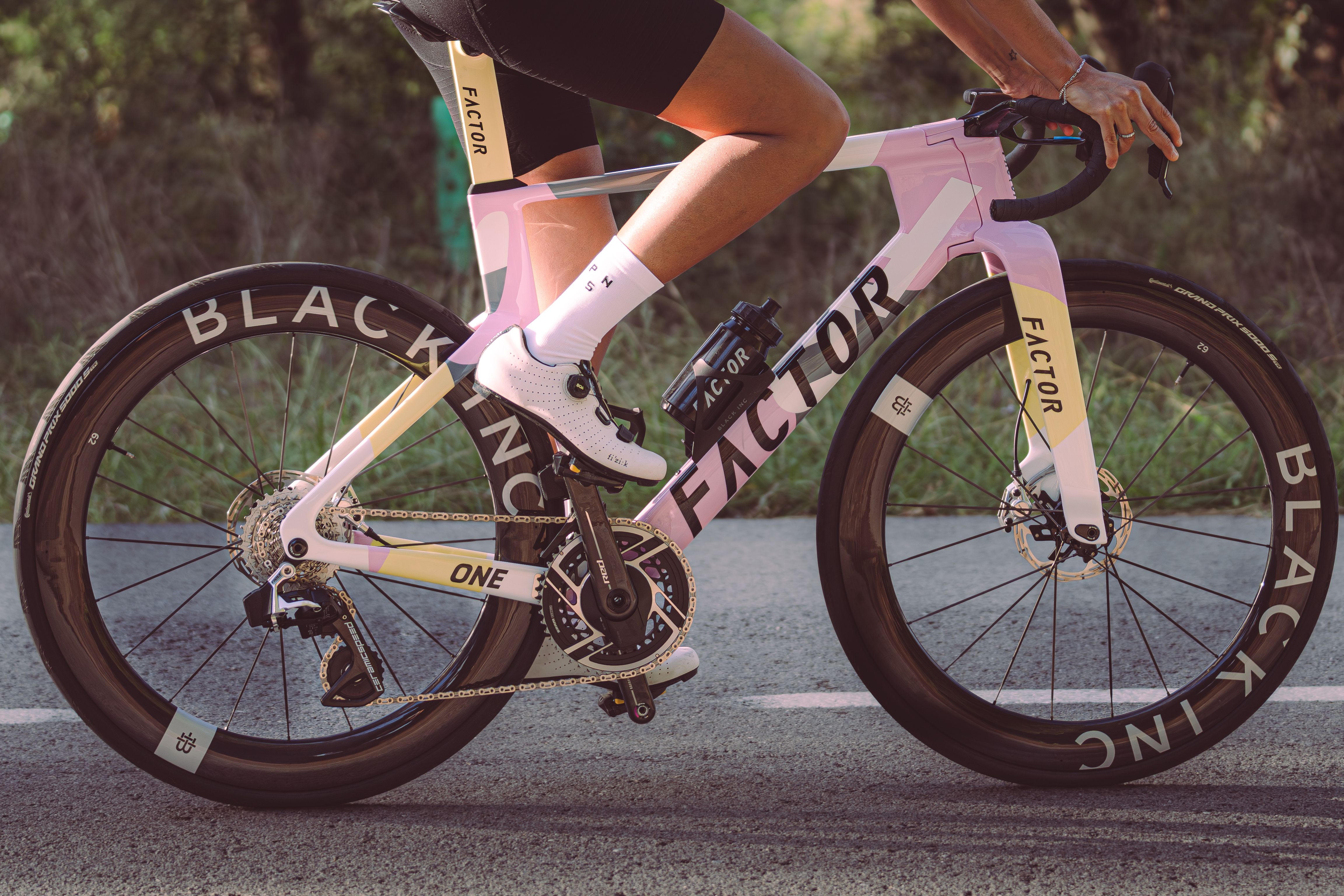
Is it a Hanzo? Is it a Y1RS? An S5? No – it’s the new ONE. Factor’s latest aero road bike claims to be its fastest UCI‑legal race bike ever, and visually it borrows cues from some of the most proven aero platforms on the market. But is it really the fastest, and how much should you trust aero claims in the first place?
Here’s what we actually know about the stunning new Factor ONE – from Factor’s own launch data and from independent wind‑tunnel testing by Cyclingnews Labs.
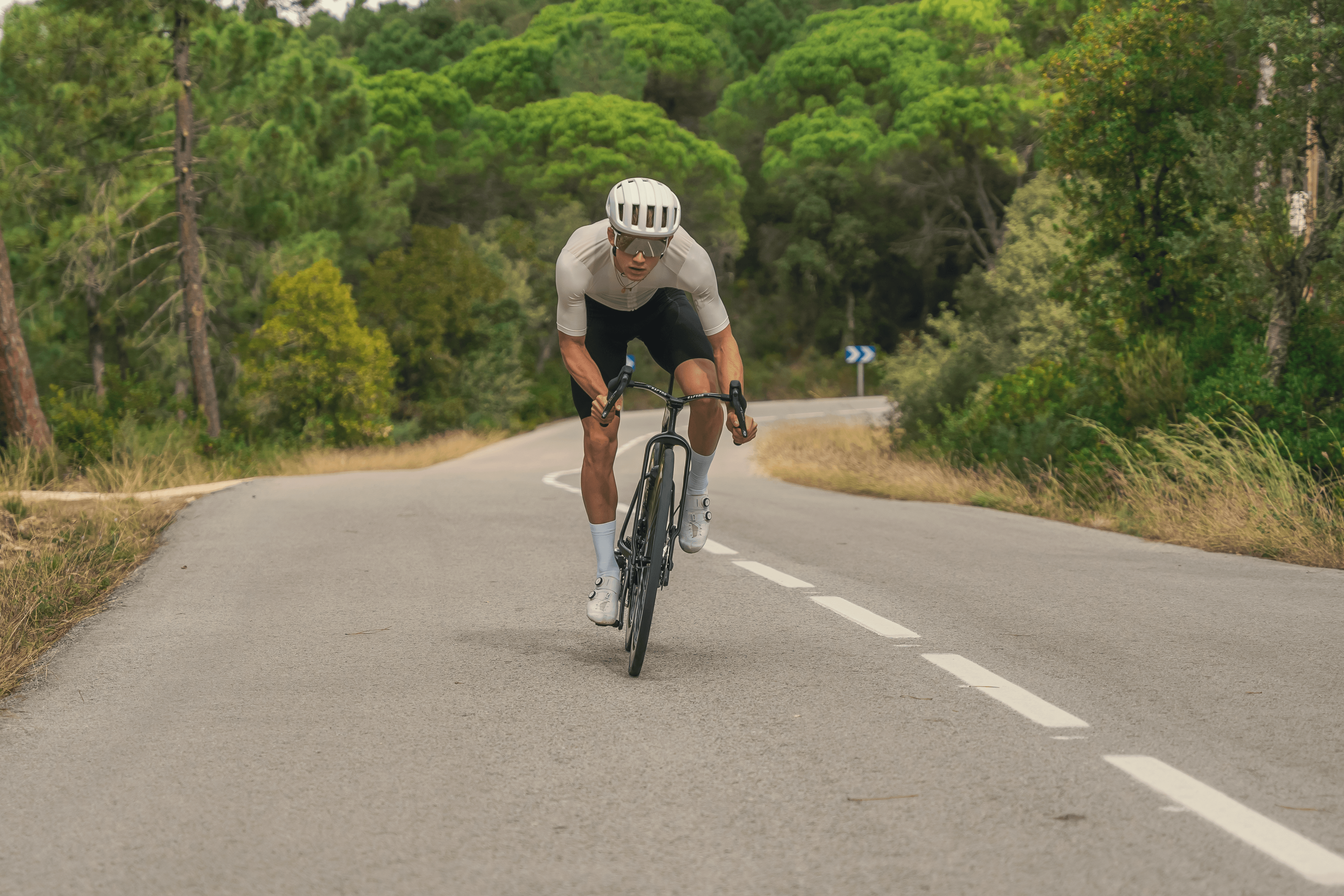
What is the new Factor ONE?
The new ONE is Factor’s out‑and‑out aero race bike, replacing the original ONE
and sitting alongside the OSTRO VAM and O2 in the range. It’s built around
three ideas:
- Use the relaxed UCI fork/head‑tube rules to the absolute limit.
- Design the bike around modern race positions (forward saddles, short
cranks, narrow bars, long reach). - Treat frame, fork, bar, wheels and bottles as a single aero system.
Headline design features from the launch book:
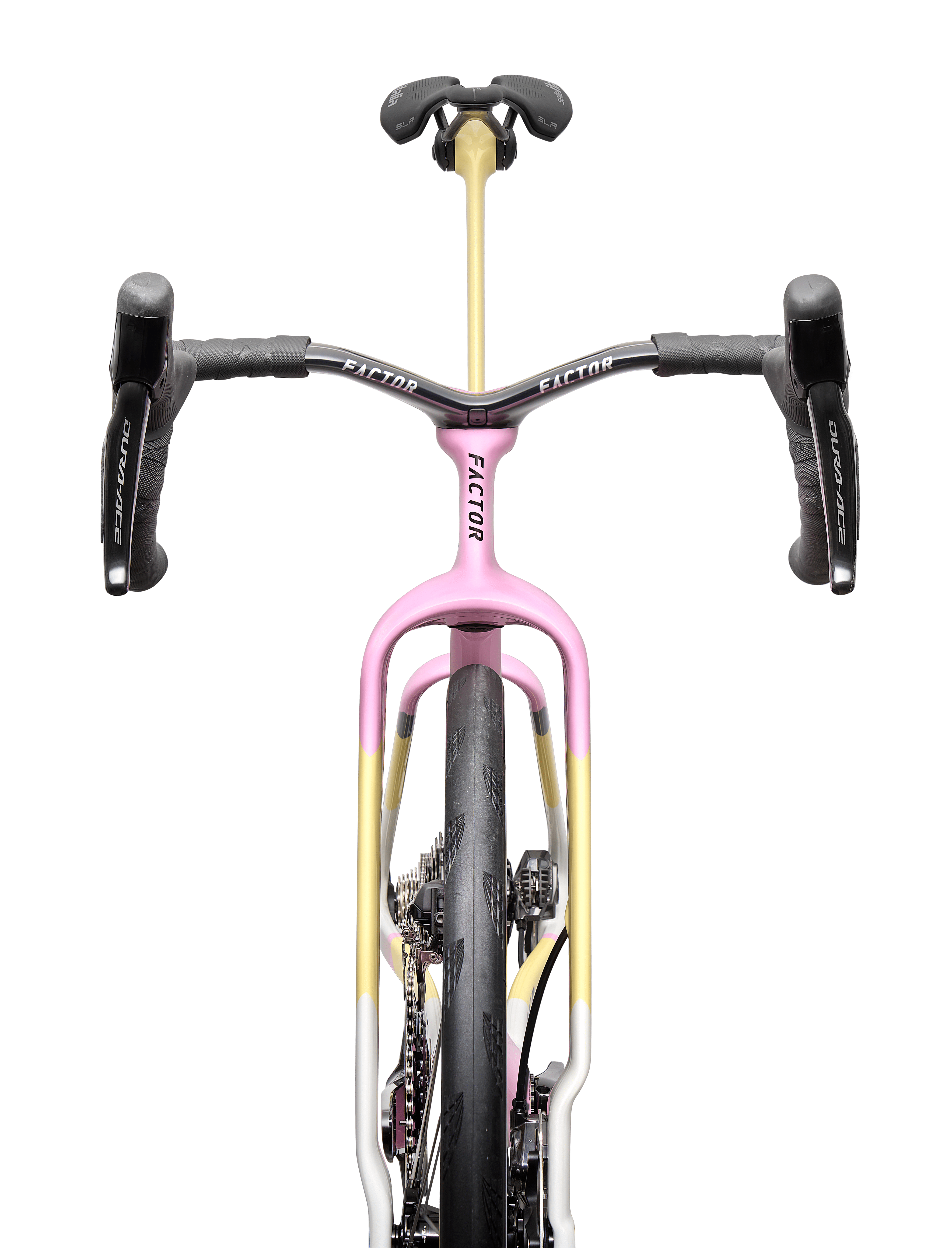
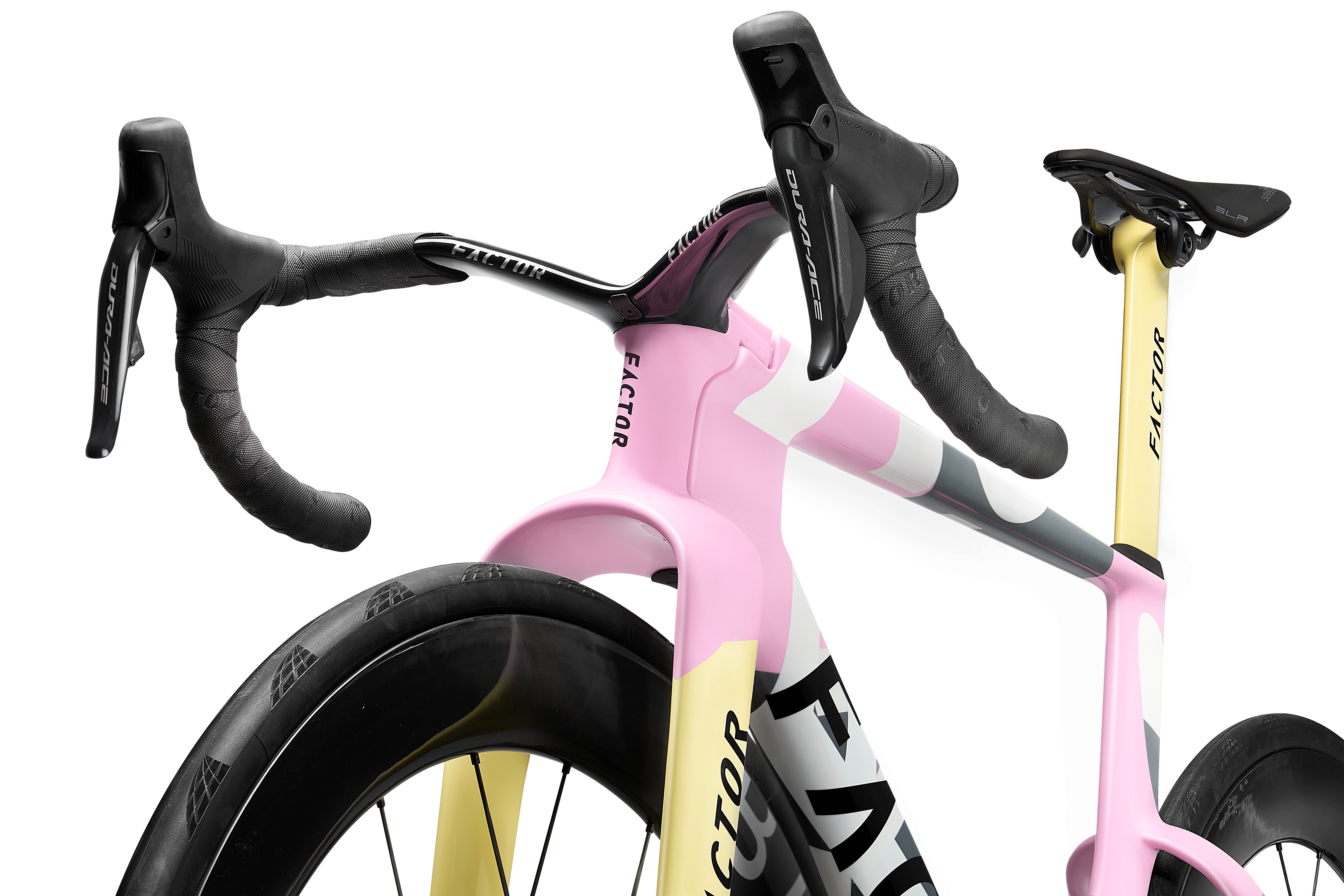
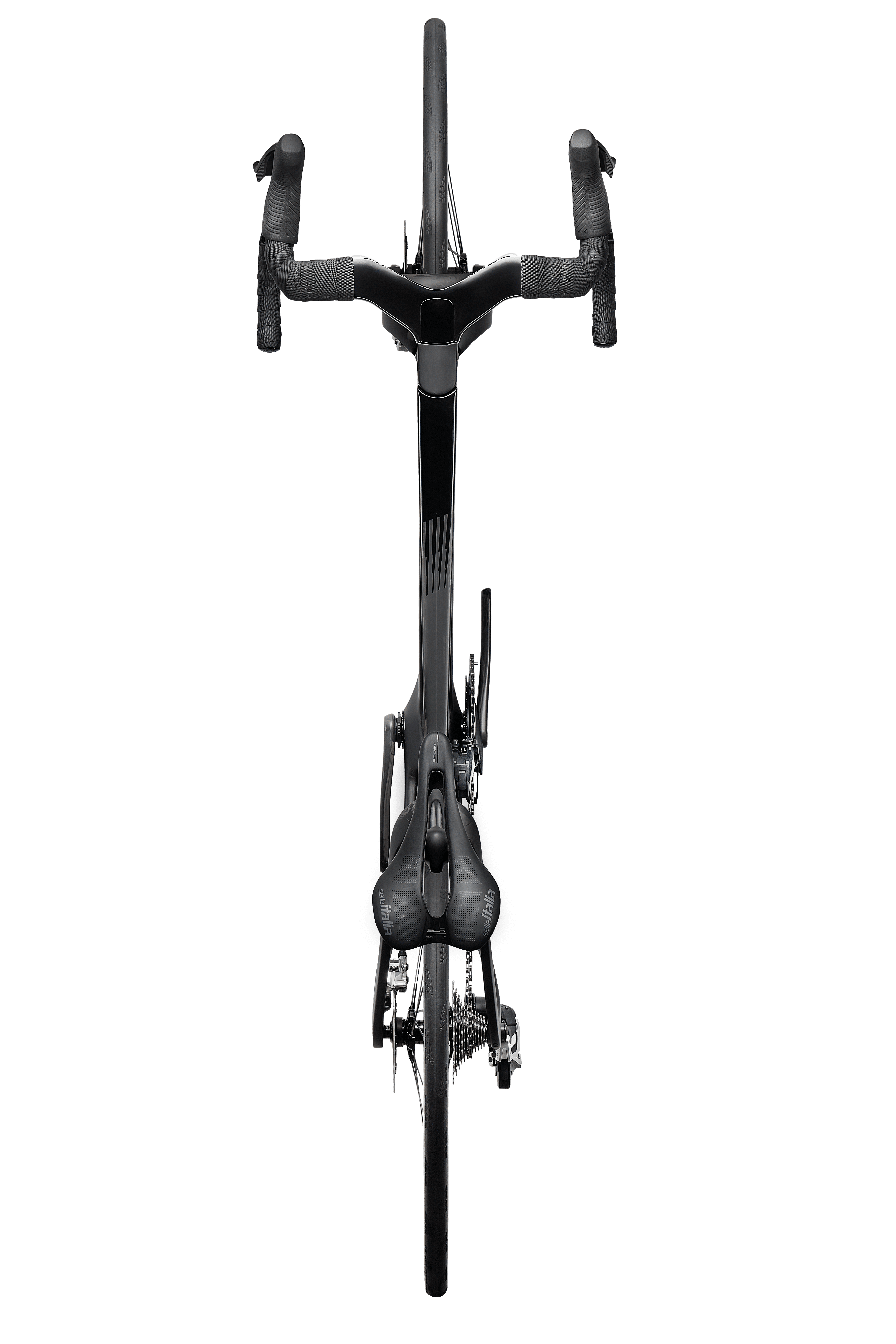
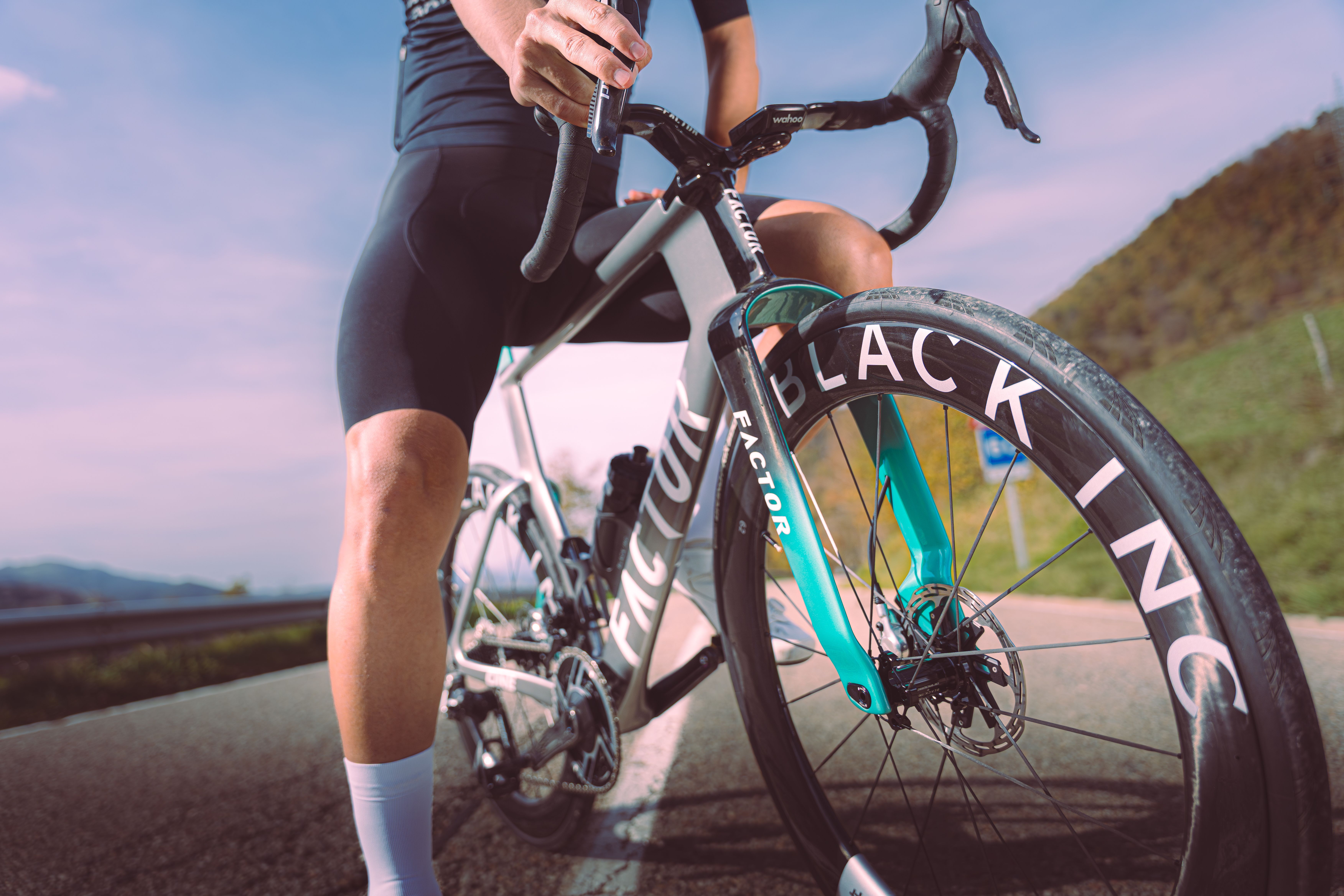
- Bayonet fork with ultra‑wide legs and a very narrow head‑on profile
- Deep “chin” fairing under the head tube to manage airflow off the front
tyre - Integrated cockpit with no traditional stem – just bar sizes equivalent to 110–150 mm stems
- Very steep effective seat tube angle (73.5°–77° via adjustable post head)
- Increased BB drop (+5 mm vs OSTRO) to compensate for shorter cranks and bigger tyres
- Identical steering geometry across all sizes, with toe overlap designed out
- Fully internal routing, disc‑only, electronic‑only drivetrain
Factor’s own internal aero data (bike + rider, in their protocol) claims:
-
> 8% “faster” than OSTRO 2.0
- ~ 15% “faster” than the 2024 Cervélo S5
-
> 22% “faster” than Specialized Tarmac SL8
Those percentages are relative drag reductions across a yaw sweep, but Factor does not publish the absolute numbers (watts or grams of drag), which already tells you: treat them as directional, not gospel.
Design DNA: a deliberate aero patchwork
If it reminds you of other bikes, that’s not an accident:
- The cockpit looks a lot like Colnago’s Y1RS bar system: using a single piece cockpit to make stems abundant, giving some stack for the rider through its shape.
- The bayonet, wide‑leg fork clearly lives in the same conceptual space as the Hope HB.T and the latest generation of wide‑stance aero forks (a different approach compared to the S5, which will direct the wind away from your legs by shape).
- The rear triangle and very upright seat tube/post evoke Factor’s own
HANZŌ TT project, and nod towards bikes like the Specialized Shiv TT. - The head tube and chin fairing are straight from the modern track/TT playbook, just squeezed into a UCI‑legal aero road silhouette.
Put together it can look a bit “patchwork” – a greatest hits of current aero
thinking – but it’s coherent in one sense: every major surface is shaped with the front‑on CdA and yaw stability in mind.
Factor also adds some clever details and a few question marks:
-
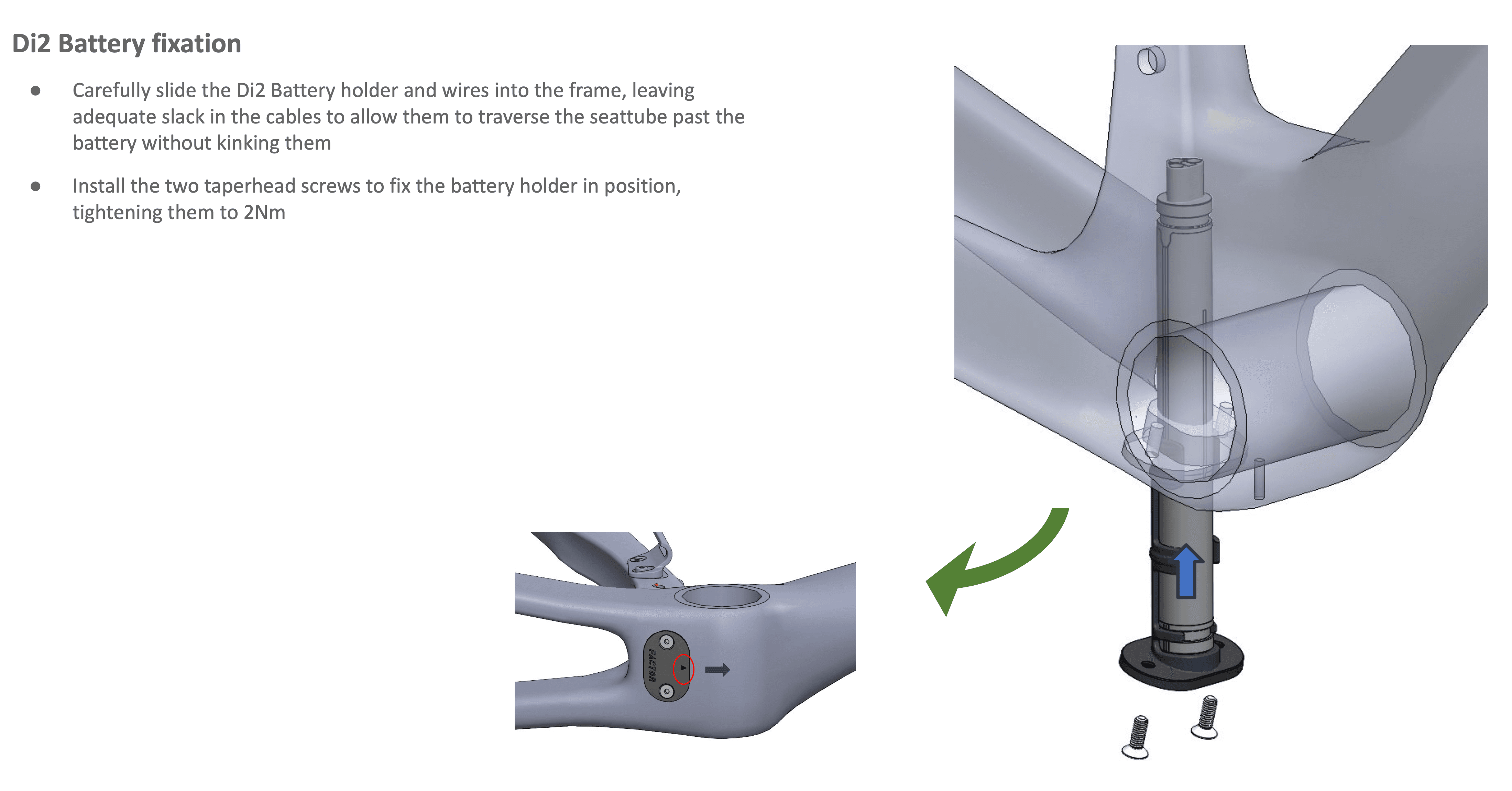
Di2 battery cage in the BB area
- Neat integration on paper, but the BB area is where water and wash‑water tend to accumulate. Long‑term durability in wet climates and under pressure washers is an open question.
-
Complex bayonet fork assembly
- The exploded diagrams suggest a more involved assembly than a standard fork/stem. Expect a steeper learning curve for mechanics – holding multiple parts and tools at once is where some expensive carbon tends to hit the workshop floor. (Although I can openly say I love the look and idea of a bayonet fork!)
-
Minimal overt compliance
- Deep tubes, an upright post and a stiff integrated cockpit suggest this isn’t chasing comfort; it’s unapologetically a race bike, not a sportive or all‑day bikepacking rig.
Independent wind‑tunnel test: Cyclingnews Labs
To Factor’s credit, they allowed Cyclingnews Labs to test a pre‑launch ONE in the wind tunnel with no control over protocol or publication. That test pitted the ONE against 11 other superbikes.
Full article and data (credit: Cyclingnews / Cyclingnews Labs):
https://www.cyclingnews.com/bikes/pro-bikes/we-took-factors-new-one-aero-bike-to-the-wind-tunnel-does-it-stack-up-to-factors-fastest-uci-legal-road-bike-claims/
Test protocol (simplified)
- Speed: 40 km/h
- Yaw angles: −15°, −10°, −5°, 0°, 5°, 10°, 15°
- Three conditions:
- Bike‑only, off‑the‑shelf spec, standardised 25 mm GP5000 S TR front tyre
- Bike + rider (fixed position, 90 rpm, consistent kit)
- Bike‑only with control wheels (ENVE SES 4.5 + 28 mm GP5000 S TR)
- Frame size: 56 cm, geometry matched as closely as possible across bikes
- Aero bottles and cages fitted as per each bike’s design; no computer mounts.
Reported measurement uncertainty:
- Rider‑on CdA: ±0.0021 m² ≈ ±1.73 W at 40 km/h
- Bike‑only CdA: ±0.0004 m² ≈ ±0.33 W at 40 km/h
Results: bike‑only – the ONE is clearly fastest
This is where the ONE really stretches its legs.
- Weighted‑average CdA: 0.0747 m² – best of the test
- At 40 km/h, 61.51 W of aero drag
- That’s 2 W better than the next‑fastest bike and 40.28 W faster than
the baseline Trek Émonda ALR (round tubes, external cables, shallow wheels)
Cyclingnews point out that the gap between 1st and 2nd is larger than the gap between 2nd and 7th. In the context of very tightly optimised superbikes, that’s a big result.
Results: bike + rider – effectively tied with the S5
Once you add a human, differences shrink – as they always do.
-
At low yaw, the Factor ONE is the fastest on test:
- Weighted rider‑on CdA: 0.3188 m²
- Next best Cervélo S5: 0.3260 m²
-
At higher yaw, the S5 claws back ground. Over the full weighted yaw
distribution:- S5: 0.3187 m²
- ONE: 0.3188 m²
That 0.0001 m² difference is utterly negligible and within the stated
uncertainty. In watts:
- Factor ONE: 273.17 W
- Cervélo S5: 273.12 W
So in Cyclingnews’ own words: the S5 “wins” on paper, but by less than the noise level. Given that their S5 ran a 1x drivetrain with no front derailleur (usually worth ~1 W at these speeds), you could comfortably argue the ONE and S5 are functionally tied in realistic rider‑on aero performance.
Results: standardised wheels – still on top
Cyclingnews also bolted in ENVE SES 4.5 wheels to see how frames perform with a common wheelset:
- With ENVE SES 4.5 + 28 mm tyres, the ONE remains the fastest bike in the bike‑only test:
- Weighted CdA: 0.0761 m²
- 62.65 W at 40 km/h
That’s 1.14 W “slower” than with its native Black Inc 62 wheels on the same protocol, but still the best of the group. The Colnago Y1RS and Dare see bigger relative gains from the wheel swap; the Cervélo drops down the order.
The takeaway:
- The ONE is exceptionally fast as a complete Factor system, and
- It’s still class‑leading even when you neutralise wheels as a variable.
Why you shouldn’t blindly trust aero claims
All of this paints the ONE in a very positive light – and it should – but it also highlights why consumers need to read aero numbers critically, for any brand.
A few key questions to always ask:
-
Is it bike‑only or bike + rider?
- Bike‑only exaggerates differences because the bike is 100% of the drag.
- With a rider, the bike might be 20–30% of total CdA, so gaps shrink dramatically.
- Factor’s percentage claims don’t state clearly whether they’re bike‑only, rider‑on, or some mix. Cyclingnews explicitly shows both.
-
What yaw distribution is used?
- Is the brand quoting best‑case at one flattering yaw angle, a simple average over ±15°, or a realistic weighted yaw distribution?
- The ONE seems particularly strong in maintaining performance across yaw, which is arguably more important than winning a beauty contest at 0°.
-
What’s the full setup?
- 1x vs 2x, front derailleur or not, tyre width, bottle setup, computer
mounts, rider posture – all of these move CdA by 1–5 W each. - Example: Cyclingnews’ S5 was 1x and still basically tied with the ONE.
- 1x vs 2x, front derailleur or not, tyre width, bottle setup, computer
-
What kind of air are we talking about?
- Almost all wind‑tunnel work uses clean, laminar airflow. It’s repeatable and useful, but it’s not the chaotic, turbulent air you see in the real world.
- As far as I’m aware, Reserve is still the only major wheel brand openly leaning into turbulent outdoor testing – measuring aero performance in genuinely messy, real‑world wind. That kind of testing is where we find out if a design behaves predictably outside the controlled environment of a tunnel.
-
Is the bike designed as a system – and are you buying the whole system?
- Most current aero bikes, including the ONE, are optimised as closed systems: proprietary cockpit, specific wheel depth and tyre width, branded bottles, sometimes even specific tyres.
- Cyclingnews’ wheel‑swap test underscores this: the ONE is fastest with Black Inc 62s and slightly slower on ENVE, while some competitors benefit more from the ENVE swap. The “fastest frame” story is inseparable from “with which wheels and tyres?”.
So, where does that leave Factor’s “fastest ever” narrative?
- Factor’s own data indicates large gains vs OSTRO, S5 and SL8 in their protocol.
- Independent data shows the ONE as the fastest bike Cyclingnews has ever tested in bike‑only, and effectively tied with the S5 with a rider.
The fair summary is: the ONE is right at the very sharp end of aero performance, but no honest reviewer can say it’s uncontested, universally, in‑all‑conditions “the fastest aero road bike in the world.” It’s one of a tiny handful in that conversation.
Ride and race context
A few real‑world context points:
-
Weight
Cyclingnews weighed an unpainted size 56 at 7.35 kg bare. In a realistic complete build with pedals and bottles, the ONE should sit very competitive among its competing aero bikes, which is very respectable for such an extreme aero design. -
Use case
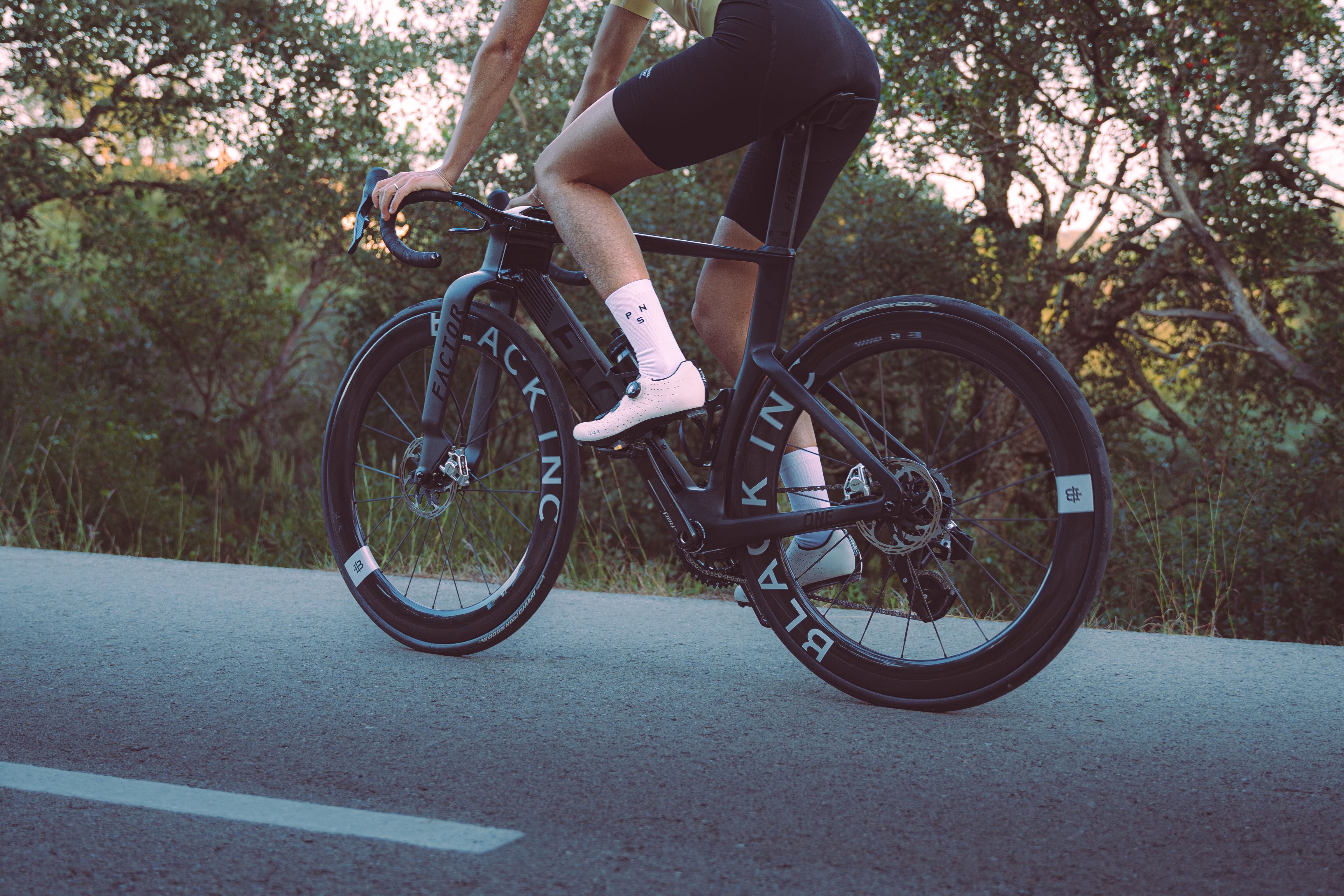
Israel–Premier Tech riders reportedly used the ONE mainly on flat or rolling stages, defaulting to the OSTRO (and O2) elsewhere. That suggests Factor envisions a two‑ or three‑bike race ecosystem:- ONE for high‑speed and bunch sprints
- OSTRO VAM for “all‑round” race stages
- O2 for the pure climbing days
-
Position and comfort
The geometry and cockpit encourage a very forward, low, narrow setup. Perfect if you live for crits, flat races, and TTT‑style speed, but probably not the first choice if you want a relaxed all‑day position. But it is very clear that this is not and endurance bike I guess. ;)
Verdict: a new benchmark, with caveats
Put simply:
- The Factor ONE is one of the fastest – and likely the most aero‑optimised road bikes available right now, especially in bike‑only metrics.
- It appears to set a new benchmark for consistency across yaw angles rather than just being fast in idealised low‑yaw scenarios.
- It’s a deliberately aggressive, pro‑style race bike with some clever ideas and some trade‑offs (complex front‑end assembly, questions about long‑term weather sealing in the BB area, ...).
It is not as simple as saying “this is the fastest aero road bike, full stop, look at this percentage.” The truth, as always, is protocol‑dependent and rider‑dependent.
Pricing
Oh I think you didn't stumble across this article expecting a bargain however a "Premium Package" Frameset will set you back €8,199.00 and a "peoples" SRAM FORCE setup comes out at €13,399.00. The range tops out at an eyewatering €15,899.00 for the Campagnolo Super Record 13s setup.
So don't expect young guns racing passionate in amateur cat races on this bike. It's clearly for the more wealthy upon us. As all super bikes are. 🥲
From my side: I’ve already requested a test bike. If that comes through, I’ll dive into the practical side – assembly, fit, handling at race speed, long‑ride comfort, and whether the on‑road feel matches the wind‑tunnel hype. When that happens, I’ll report back with a deep‑dive review from the saddle, not just from the data.


