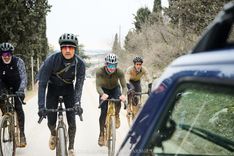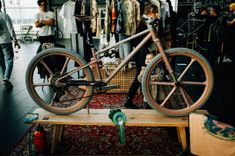
Some of you might have followed along on social media: Cyclingworld Europe 2026 took place last weekend, and we were there.
We’re not a classic news outlet. We’re not in the business of pumping out daily press releases, rumours and clickbait just to compete for attention in an ad-driven media circus. We still get a lot of emails and updates from brands though — a lot. And every now and then, something is interesting enough to actually invest time in and write about. Not by copy-pasting PR copy, but by giving it some perspective. Sharing ideas. Picking out the products, services and trends that stick with us in our little bubble.
A bike fair is basically like exam season at university: you cram a crazy amount of information into your brain, only to forget most of it a few days later. But it’s never for nothing: A good event brings the right people together. Brands go out of their way to show their latest and greatest, and if you pay attention, you start to see the underlying patterns.
So this is not a complete report of everything that happened at Cyclingworld. It’s a personal résumé of what stuck with me: the trends that feel relevant, the products and ideas that stood out, why real-world testing matters more again — and why talking to actual humans at a bike fair can feel strangely refreshing in times of AI.
Cyclingworld is rising. Again.
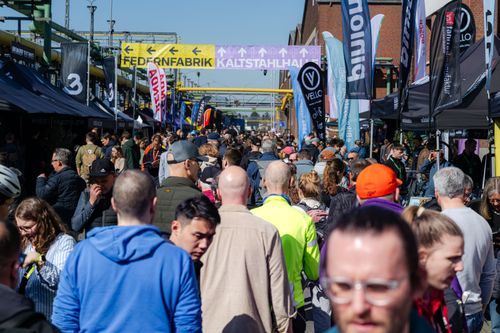
Cyclingworld says 500 exhibitors showed up this year, with almost 35,000 visitors coming through Areal Böhler. If you include the new Urban Hub in Düsseldorf city centre, the number reportedly climbs to around 50,000. Depending on how you count it, that’s a 33% to 54% increase in consumer visitors compared to 2025. Either way: that’s not just healthy growth, that’s real momentum.
Even more telling were the roughly 4,000 B2B trade visitors and nearly 400 accredited media representatives. More than 6,000 test riders completed around 20,000 registered test rides during the event. Those are not small numbers anymore. They show very clearly that Cyclingworld is no longer just a nice-looking season opener with cool bikes and good coffee. It is becoming one of the key meeting points in European cycling.
That feeling was everywhere. Nearly all the relevant big brands were present, but what makes Cyclingworld interesting is that it still manages to mix the polished high-volume players with custom builders, niche brands, e-bike specialists, urban mobility concepts, cargo bikes, folding bikes and some properly weird stuff in between. The range is broad, but not random. It feels like a pretty accurate snapshot of where cycling is right now.
The new Urban Hub also seems worth mentioning. Not because every side event needs to become a revolution, but because it shows where organisers are trying to take the format. If cycling wants to be more than just sport and product obsession, it needs to show up in the city too.
Hands on bikes
One of the biggest focuses this year was the test track — and it was busy. Really busy. Pretty much every serious bike brand also brought test bikes, and that matters.
For some premium brands, that kind of short demo ride will probably always be a mixed bag. Riding a high-end performance bike up and down the road for ten minutes doesn’t suddenly reveal its full character, and it definitely doesn’t guarantee sales. But in general, being able to get hands-on with a product in the real world is becoming more important again. 20,000 registered test rides is a pretty loud signal.
We live in a strange moment where almost anything can be delivered to your doorstep in one or two business days. You can look up specs, geometry, reviews and opinions at any hour of the day. And if the information isn’t there, AI will gladly make something up for you. For many products that may be enough. For bikes, it usually isn’t.
Bikes are still physical objects with geometry, fit, handling and emotion attached to them. You can’t fully understand that through a screen. Especially for D2C brands like Canyon and Rose, that reality seems to be hitting home. They’re reacting with a big presence at shows, flagship stores, events, demo fleets, rides, raffles, community activations — the full programme.
And that shift was visible at Cyclingworld. After many brands pulled back from Eurobike, they are now showing up again with proper stands, proper test bikes and actual energy. Less “please scan this QR code”, more “here, ride it”.
Trends and new products
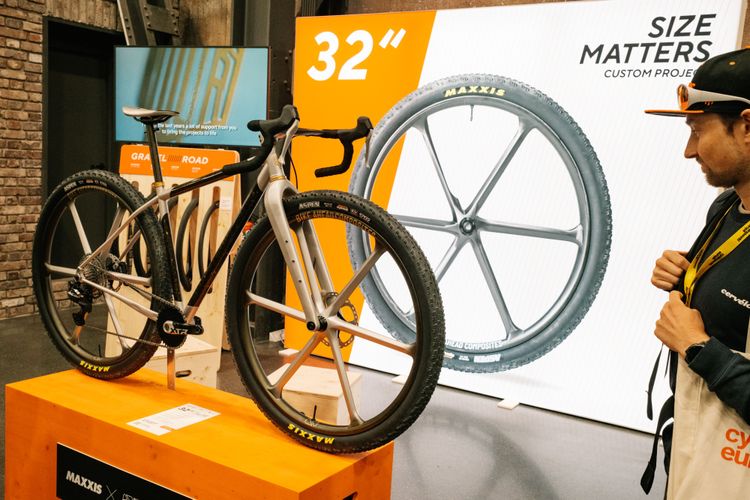
32” wheels: hype, signal or actual new standard?
The obvious hype right now? 32” wheels.
They’re not only being raced to stage wins at events like the Cape Epic, they’re also popping up on prototype bikes all across the show floor. MAXXIS showed a custom 32” gravel bike with new Aspen tyres, and there were also enduro, downcountry and other bikes rolling around on wagon wheels.
The obvious questions remain the same though: who can actually ride them well? Who are they really for? And maybe most importantly, in what terrain — and at what level of technical difficulty — do these bikes actually start to excel? That feels like the key point. Not just whether they are faster in theory, but where the rollover, stability and momentum advantages become meaningful enough to outweigh the compromises.
At a height of 178 cm, I’m right on the edge where bike fit and rideability will work fine on both MTB and gravel bikes - but what about shorter legged or smaller riders? The 32” wave is one of those trends that is clearly real, but still looking for its final use case. A lot of people want to believe. Not everyone will fit.
Aero is everywhere now
The other trend that keeps spreading everywhere: aero everything.
Aero bikes are already one of the biggest drivers in road cycling, but the logic has now leaked into basically every category. Clothing keeps drifting closer to pro-level race wear. Skinsuits are no longer just for the pointy end of the sport — they’ve become part of the standard line-up for many brands. Aero mesh fabrics are showing up not just on sleeves, but on bib shorts, gloves, socks and all kinds of previously neglected marginal-gains zones.
And yes, they are marginal gains — but measurable ones. That’s exactly why they matter. Aero often comes almost for free compared to other upgrades, and even for amateurs there is something very real about feeling faster, moving cleaner through the air, and getting speed without paying extra in effort. I’ll take that whenever I can get it, and so will a lot of other riders.
You can see it in helmets too. Not because every category is suddenly becoming a pure wind tunnel exercise, but because more and more riders are willing to choose aerodynamic options when the trade-offs are small enough. Even at the level of stylish café rides and polished group spins, the amount of aero helmets is getting a bit wild. I’ll be racing a KASK Nirvana for most events this year myself, because it saves watts and therefore energy — and especially over ultra distances, that is very much not nothing.
The age of “that’s probably aero enough” is over. Aero is always on.
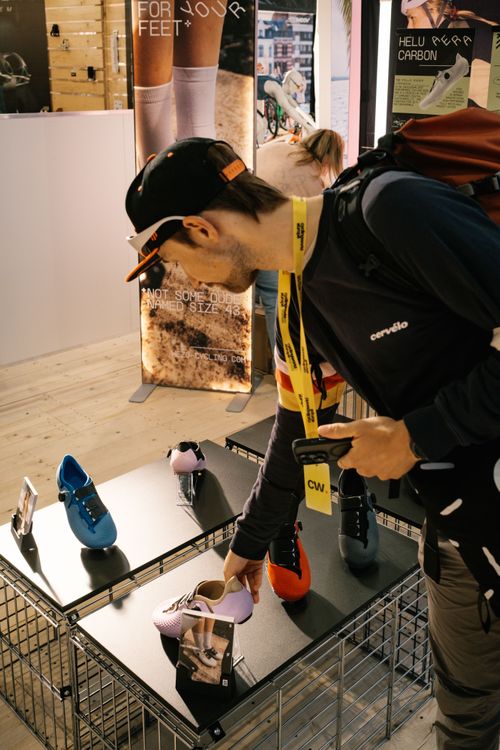
(Mass) customization is coming in hot
One thing I found especially interesting was the amount of brands — small startups as well as bigger players — showing concepts around mass customization and individual made-to-measure solutions enabled by additive manufacturing techniques.
HEZO, for example, presented a fully custom 3D-printed cycling shoe. The concept works a bit like the Posedla Joyseat: you take photos of your feet from certain angles, in good light, on a plain background, upload everything online and after a few weeks you receive a shoe made for your feet.
In its current form, it still looks a bit rough around the edges, and personally I wouldn’t trust it yet for the kind of riding I do (considering the occasional hike-a-bike…). But the concept is genuinely interesting — especially at a surprisingly affordable price. With more refinement and the right investment, this kind of product has the potential to absolutely disrupt the shoe market.
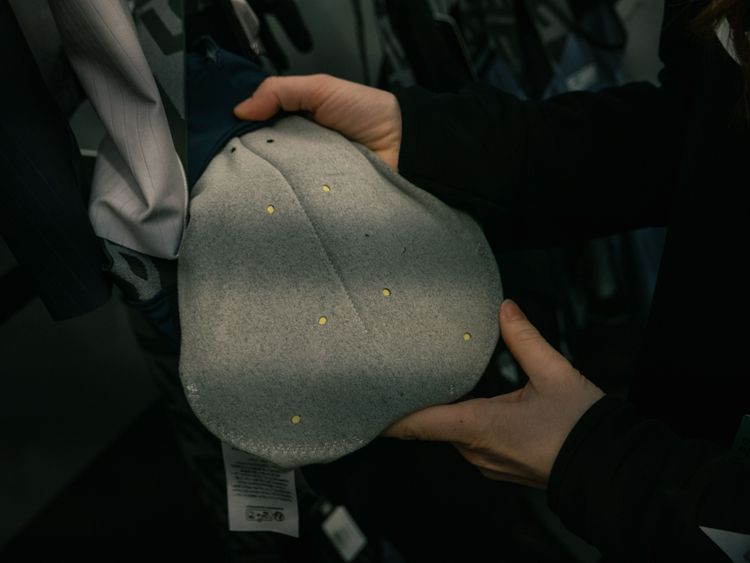
And that’s not where it ends. I also heard rumours of 3D-printed bib short chamois. The idea is similar to what we’ve seen with rotational impact systems in helmets or 3D-printed saddles: separating different layers and functions more intelligently, so movement on the saddle is not transferred directly onto your precious skin.
There was more, but let’s not turn this into a phone book. The short version: mass customization and individualization at an affordable price point, facilitated by new methods in manufacturing is coming to cycling in a big way. Contact points first, maybe, but probably not only contact points for long.
Recycling, repairability and sustainability
Sustainability is obviously a major topic, especially in cycling. And finally, it’s starting to become more than just a sad little CSR PDF document and a green leaf icon slapped onto a product page.
Even performance brands like HUNT Wheels are already launching programmes around recycled carbon wheels. Some sustainability messaging still feels a bit like someone from corporate had to come up with a deck before lunch, but other brands have it deeply built into their identity — hi Ortlieb! — and plenty of others are catching up fast.
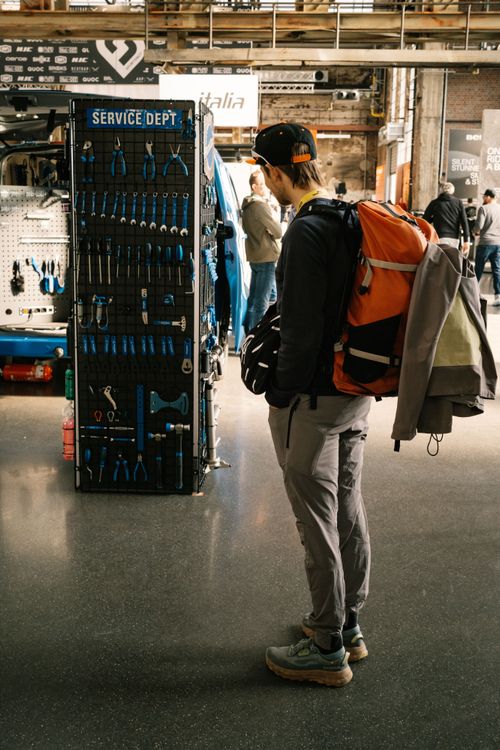
What’s encouraging is that the more interesting ideas are often also the most practical ones: recycling old tyres into belts, repairing carbon frames, 3D-printing parts that are otherwise unavailable, creating spare-part libraries, improving repairability, enabling self-service. Gear repair stands like Albion’s got a lot of attention, and rightly so.
Pressure around climate impact is slowly reshaping the industry, but it’s also delivering very direct benefits for riders. More repairability, more spare parts, longer product life, less waste. That’s not just good ethics — it’s good product thinking.
Urban mobility still searching for its final form
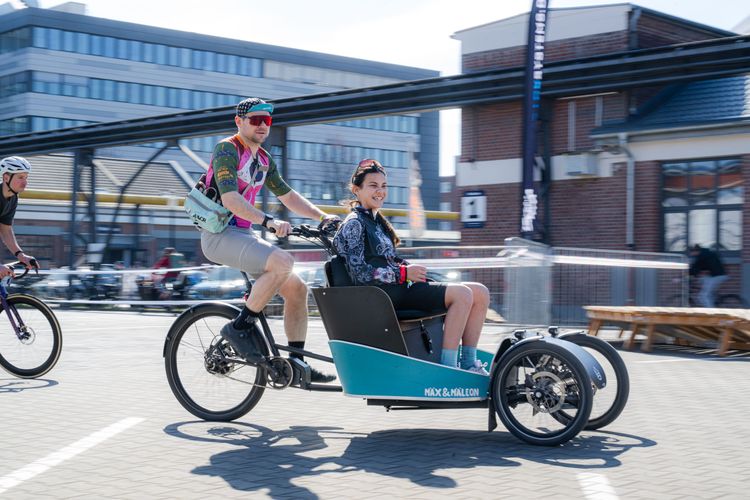
This is another area where the industry is expanding hard. Bikes are the future, and e-bikes are acting as an accelerator for smarter urban mobility: fewer combustion engines, less four-wheeled traffic, lower-threshold mobility (say: driving licenses, budget, insurance cost, or athletic capabilities in comparison to a bio-powered cargo bike), fewer parking headaches and, in many cases, genuinely affordable individual transport.
Cargo bikes continue to be a big topic, and the market is flooded with new models, new use cases, new accessories and new ideas. At the same time, some of the things showing up barely look like bikes anymore. They start to resemble something closer to the old BMW C1 motorbike concept: semi-sheltered, some luggage space, slightly weird, not much wider than a regular bike, but clearly trying to become something else.
That makes this category fascinating to watch. It still feels like the market is waiting for a defining spark. What direction do these products really take? Which formats will survive? How do we use the e-bike boom to actually move urban infrastructure forward instead of just selling more expensive gadgets into broken systems?
Plenty is happening here. The final shape of it all is still up in the air.
Real interactions in an AI world
The thing that stuck with me most was not one specific bike, wheel, helmet or widget. It was the people.
Cyclingworld was buzzing with a very mixed crowd: all ages, sporty and non-sporty, industry people, consumers, curious visitors, full-kit nerds, urban riders, weekend cruisers, race snakes and probably a few people who just came for coffee and nice steel bikes. That mix matters.
And from an industry perspective, it also felt a bit like a family reunion. Friends from TwoTone Consulting, Crank Communication, Nabe.cc and plenty of other familiar faces from across the bike world were there, and that changes the whole atmosphere of a fair. It stops being just booths, launches and business cards. It becomes a place where the wider cycling scene actually meets — media, brand people, designers, riders, consultants, wholesale and bike shop folks, community builders, all in one slightly overstimulating place.
Sure, from a professional perspective, there are moments when you wish you didn’t have to push through a wall of people to get from one hall to the next. But a bike fair lives from exactly that: people showing up, looking around, testing things, asking questions, spending money, talking nerdery and nonsense, getting inspired.
And I do think this has something to do with how online media is evolving. We’ve already seen cases where some poor marketing person at a big brand used an AI-generated studio image and didn’t properly check whether any of the details actually made sense. We all know that moment by now: you look at something online and think “wow”, only to realise a few seconds later that it was generated, polished, synthetic — not fake exactly, but not quite real either.
You can’t fake the feeling of a real event that easily. Not yet.
You can’t fake touching a bike, riding it, talking to the person who designed it, bumping into friends, meeting people who share your oddly specific obsession with tyres, luggage systems or drivetrain friction. A good expo stand is still physical. A conversation is still a conversation. A shared eye-roll over bad bike industry trends still hits better in person.
And maybe that’s exactly why these events matter more again.
In that sense, bike shows and real-world events may have a bright future not despite AI, but partly because of it. The more online content becomes generated, flattened and frictionless, the more valuable actual human interaction starts to feel.
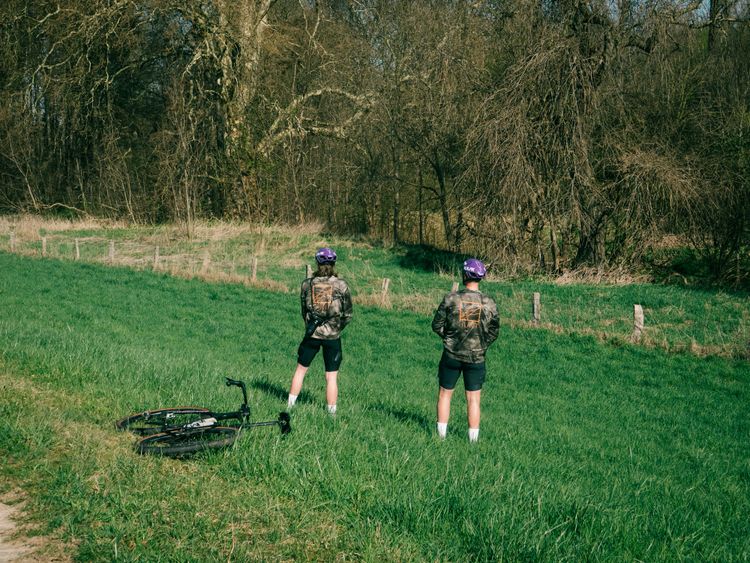
Here’s to being human. And to talking to each other in real life. And to riding real bikes.